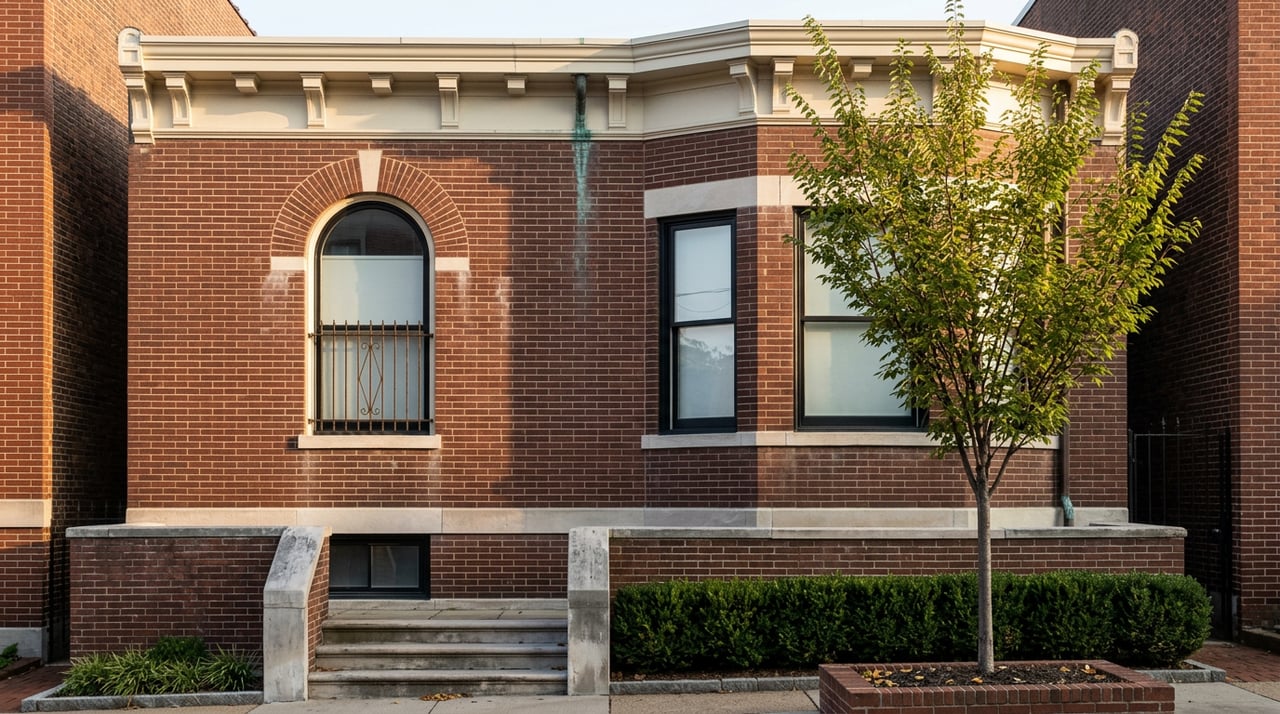
Dupont Circle's Real Center Isn't the Circle
September 3, 2026
September 3, 2026
For three days in mid-June, the park that gives this neighborhood its name disappeared behind anti-scale security fencing. The National Park Service closed Dupont Circle itself, the actual traffic island with the fountain and the chess tables, from Friday morning through Sunday evening, right in the middle of the Juneteenth and Capital Pride weekend that usually draws some of the year's largest crowds to those same nine chess tables and that same fountain. City officials logged roughly 250 permitted events across the District that weekend. The literal circle in Dupont Circle was off limits for most of it.
Ask a longtime resident how their weekend actually went and most will tell you it barely registered. That gap between what should have been a disruption and what actually happened is the whole story of this neighborhood right now.
The fencing decision drew real controversy. Dupont Circle had become a flashpoint during WorldPride 2025, when federal officials floated a similar closure and then reversed course after pushback from community members and LGBTQ advocates. This year the closure went ahead, framed by the Park Service and the U.S. Park Police as a public safety measure rather than a statement about the community that has used the park as a gathering point for more than a century.
What makes the episode worth dwelling on isn't the politics of the fencing. It's what the closure exposed about how little the physical circle actually organizes daily life here anymore. The parade route ran through the neighborhood. The bars filled up. The restaurants on P Street and Connecticut Avenue did the business they always do on a big weekend. The park itself, for three days, was scenery you couldn't stand in.
There's one recurring event that genuinely needs the circle and can't be relocated to a nearby block: Music in the Circle, the outdoor concert series that has brought acts ranging from RnB groups to Forró ensembles to brass bands directly into the park through the spring and summer. That series is named for its location because the location is the point. It's the exception that proves how unusual it is for anything here to actually depend on the park rather than merely being adjacent to it.
Everything else that defines a week in this neighborhood happens somewhere else.
Start with food. Dupont has run a Sunday FRESHFARM market for years, open 8:30 a.m. to 1:30 p.m., long enough established that the Wall Street Journal and the Financial Times have both named it among the country's better farmers markets. But the newer addition tells you more about where the neighborhood is actually growing: a Thursday market, created through a partnership between the Dupont Circle Business Improvement District and FRESHFARM, running 3 to 7 p.m. along the 1900 block of Massachusetts Avenue NW. Not the circle. A full block of Massachusetts Avenue that didn't have a market at all until the BID decided the neighborhood needed a second one on a different day, in a different location, for people who can't make Sunday mornings work.
The same pattern shows up in the neighborhood's art scene. ArtWalk Dupont happens on the first Friday of every month, and it's built as a self-guided circuit through galleries, embassies, and cultural institutions scattered across the surrounding blocks rather than anything staged in the park. The August edition routed visitors through the Middle East Institute's gallery at 1763 N Street NW, the Fraser Mansion at 1701 20th Street NW, and the National League of American Pen Women's headquarters at 1300 17th Street NW, among others. The next one lands September 4. None of those addresses touch the circle. They ring it.
The park sits at the center of the map. It has stopped sitting at the center of the week.
If you want the clearest evidence of where the neighborhood's energy has actually landed, look at the two restaurant stories that defined this year. Uchi, the Austin sushi concept from James Beard winner Tyson Cole's Hai Hospitality, opened near Dupont Circle on May 12 with a 185-seat space built around a hidden VIP entrance and a menu of DC-specific dishes layered onto its Austin staples. Weeks later, on June 3, The Riggsby reopened inside the Royal Sonesta on P Street, restaurateur Michael Schlow's long-awaited second act for a supper club that had closed in 2019 when its original hotel home changed hands and became what is now Lyle.
Both are genuine events in DC's dining scene, and neither chose an address on the circle itself. Uchi opened near Dupont Circle rather than facing it directly, and The Riggsby's second act landed specifically on P Street, inside a hotel that sits blocks from the fountain. That's consistent with everything else happening here: the addresses that matter to a resident's actual week, the restaurant reservation, the Thursday market stop, the gallery on the walk home, sit on the blocks radiating outward from the park rather than inside it.
None of this makes the circle irrelevant. It's still the reason cross streets here read Massachusetts, Connecticut, New Hampshire, and 19th all converging in one place, still the anchor that makes this one of the most walkable stretches of Northwest Washington, still a draw for tens of thousands of people during the annual Capital Pride parade. But if you're measuring what actually shapes a week spent living here, the park is the address on the map, not the place where the map gets used.
The practical version of all this is simple. If you want produce, go Sunday morning to the market that's been running for years or swing by Thursday evening on the 1900 block of Massachusetts Avenue if the weekend doesn't work for your schedule. If you want a gallery night, show up the first Friday of September and start walking, no ticket, no reservation, any open door is a fine place to begin. If you want dinner reservations that are actually hard to get right now, P Street is where to look first, not the blocks facing the fountain.
And if you're the kind of resident who tracks these things, watch what happens the next time there's a major weekend downtown. The park may or may not stay open. Either way, the neighborhood's actual rhythm, the one built on Massachusetts Avenue vendors, gallery addresses on 20th and 17th Street, and restaurant openings on P Street, will keep running exactly as it has all year, because it was never really centered on the circle in the first place.
If you're a longtime resident thinking about what your place here is worth, or simply curious how a neighborhood like this holds its value even when its namesake landmark gets fenced off for a weekend, the Vassar Broermann Group has spent years watching how DC neighborhoods like this one actually function, block by block, not just on the map. Reach out anytime you want a candid read on where things stand.
September 17, 2026
September 17, 2026
September 10, 2026
September 3, 2026
August 27, 2026
August 20, 2026
August 13, 2026
August 6, 2026
July 23, 2026
Get assistance in determining current property value, crafting a competitive offer, writing and negotiating a contract, and much more. Contact us today.